
 I am delighted to publish my first ever guest post, by Kristy Swift. A natural teacher if ever I met one, Kristy has such a delightfully inquisitive approach to learning, both for herself and for her pupils.
T-Rexes and Musical Glue
Like most kids, I was obsessed with dinosaurs. I spent hours in my Dad’s workshop, building model T-Rex skeletons from hobby kits. Assembling the “bones” was fun, but it was no use building T-Rexes if they were only going to collapse again. Once I had everything in position, I needed to keep it there.
A quick trip to the hardware store usually solved the problem. There were many adhesives available, but the best one came in two tubes. It was fun to squeeze each ingredient onto a piece of card, stirring them with a toothpick to cause a chemical reaction. This created something stronger than the original parts; something that would really stick.
I didn’t grow up to become a palaeontologist, though. I fell in love with music instead. However, I often think of those model T-Rexes, because musical concepts are a lot like those fiddly T-Rex bones. You need exactly the right mental glue to make them stick, and you create the best glue by combining several ingredients.
I recently met someone with an incredible recipe for “musical glue”. His name is Paul Harris, and he teaches so proactively that every moment of the lesson becomes fun, achievable, and likely to stay in the student’s memory. Earlier this year, he spoke at Faber Music in London and generously shared his methods.
Paul’s website maintains that teaching music is “incontestably, one of the most fascinating and stimulating of all professions.” His multi-layered approach replaces the master-apprentice model (“Let me tell you what’s wrong with you”), with something more collaborative and fun (“Let’s break this into achievable components and enjoy all of them”).
What are these achievable components, then? If a piece is sight-readable, it just means we’re familiar enough with its patterns to perform it without much rehearsal. What if we used this concept of “pattern-familiarity” as the basis for all of our teaching? We could immerse students in the patterns of any given piece, before they see the piece itself. If we explore the patterns in a variety of ways, they will stick like glue.
“Lovely Moon, Shedding Silver Light…”
I decided to try Paul’s approach with one of my vocal students. This particular girl needed a piece for her Grade 7 ABRSM exam. Given her sensitive and expressive nature, I thought she might appreciate Bellini’s Vaga luna che inargenti (Lovely Moon, Shedding Silver Light). The song is filled with unrequited longing, like a mini operatic aria. However, the Italian text is sometimes a stumbling block, particularly in combination with Bellini’s syncopated rhythms. Nevertheless, the song’s touching spirit more than justifies those challenges.
We began our warm-up by exploring different vocal colours. I asked, “What is the effect of singing on Ah, Eh, Ee, Oh and Oo? Which one makes a tone that you would call ‘silvery?’ What kinds of pieces might need a silvery timbre?”
Another section of her warm-up included the exact kind of syncopation used by Bellini in the song: firstly, we played with it as “call and response” patterns, and then as a melodic improvisation around the given rhythmic pattern.
The next step was an exploration of how various composers express “moonlight” in their music. (Renée Fleming has an entire album called Night Songs, and of course there’s the eponymous Beethoven sonata!) Let’s not forget Romantic literature, either. I asked some more questions: “How many times have you studied a poem that draws on an element of nature? Quite a few? Fantastic… what does the moon symbolise? Ah… emotional themes. Secrets, unrequited love and loneliness, perhaps? Which movies have you seen that have those elements?”
I was delighted that she had something other than Twilight to discuss here, but I would have accepted Twilight if need be! It’s also worth noting that this conversation took less than three minutes. Completely worth it in terms of the curiosity it piqued. At this point, I took the Bellini book from the top of the piano, and began to open it. My student almost dragged it from my hands. A win for Bellini! Evidently, this kind of lesson plan beats the “sing these dots in order, fail, and let me tell you how you went wrong” model.
Paul Harris, thank you!

 Over the coming weeks we coined the term ‘humming lessons’! It quickly became apparent that our main difficulty was simply going to be able to get her to make any sound at all, never mind dealing with any pitching issues. And when, eventually, she managed to hum a note, it became clear that her ability to pitch was as bad as I’ve ever encountered (that’s bad, by the way). Wow, what a project!
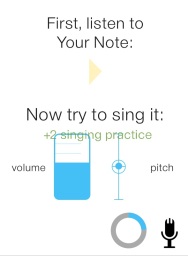 Enter
Enter  whether children think that pitching notes is some sort of unfathomable mystery! How should I know where that note is? Well in maths we have systems for working things out, which we are hopefully taught from an early age, and which we then have drummed into us for years to come. 12 x 3 = 36. I happen to know that one now, but if I do forget it I have various strategies for working it out; on my fingers maybe [I call that Mostyn maths, but that’s another story], or in columns on a piece of paper or visualised in my head. So when I ask someone to sing the A above middle C, I’m not just expecting them to pluck it out of the air. Someone with perfect pitch can. Or else someone who knows their theory knows that C up to A is a major 6th, and remembers that’s the tune to ‘The day thou gavest’ – they can do pitch it too. Or someone who can sing up the major scale, rather like moving up successive positions on a number line; they can find it too.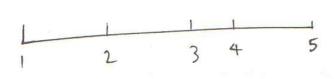

 Singing back the bass line is not a problem for her. She can sing just about every line in every piece which she has learned, so why should a simple Grade 8 aural test phase her? Not only that, but when we learn a new piece, she fully expects to be asked to sing the melody whilst she plays the bass line, or the other way around. From memory. Well why not? It’s not easy the first time of course, but five years down the line it has simply become a skill which she has developed and now takes in her stride. Having memorised sonata movements by Scarlatti and Beethoven, and a harmonically complex Brahms Intermezzo, how hard can a simple tonic/dominant bass line be?
 georgebevan.com