

Alan Hazeldine
As a student I had the good fortune to cross paths with Alan Hazeldine, an inspirational conductor and a generous teacher. In the year or so that I was accompanist to the North London Chorus [my first concert with them was Bach’s B minor mass] I learned a huge amount from him, but this single idea stands out above all else.
Alan held out his left hand, palm facing upwards:
In one ear, I have what I can hear at the moment, in rehearsal; and in the other ear [waving his right hand] I have what I want it to sound like. And all I am doing in rehearsal is matching up what I can hear with what I want to hear.
As he said this last sentence, he carefully put the palms of his hands together. So simple.
This is how I rehearse, be it choir or orchestra, but it is also how I practise. In fact, this is how I have always practised. I’m not sure whether I was ever taught to practise or whether it has just come instinctively, but many pupils do need guidance. Some need lots.
I suspect that one of the biggest problems with practice is that pupils lack the aural picture of “what they want it to sound like.” In Alan’s picture, they have their left palm held out, but have nothing to match it up to – in other words, their practice is aimless. If they can’t hear the goal – whether that be an evenness of tone, or even just the correct notes, how can they know what needs to be adjusted to improve their efforts?
This is a complex area. Many students hack their way through sight-reading without the faintest idea of what is going on around them. Why? Because they can’t hear what they are aiming at, so nothing that they play has any context; they can’t really tell whether it’s right or wrong. The solution: teach them to sight-sing, and then they will be able to hear what they see. Then they will be able to match up what they play [left hand] with what they hear in their head [right hand].
I have inherited a pupil who struggles to read the dots on the page. He can read them, but he has developed other strategies to avoid doing so if he can help it! So when it comes to reading new music, the first stage needs to be for him to pick his way carefully through the score, and build for himself an aural picture of what the music sounds like; put another way, he first needs to create that right hand, so that in his subsequent practice he knows what he is aiming for.
These things take time, and we can undoubtedly find shortcuts. The easiest is to provide that right hand ourselves, to be in possession of what we know to be the goal, and to guide our student towards that. There is, however, a fundamental flaw with this strategy: what does the student do when we are not there? This method works fine in lessons, when indeed we can be fooled as we see their progress in front of our own eyes, but what about when they are practising alone? And what about when they move on?
My preference is not to find shortcuts, but to give them a hand in working out how to learn for themselves. It takes time and patience to teach our pupils how to direct their own learning rather than simply to follow our lead, but the rewards are so much more enduring.
 But for a sight-reading test, we need a different approach. Don’t correct the mistakes! In fact, it’s not unlike running a hurdles race (although I need to stress that I speak with very little first hand experience!) In the hurdles the athletes quite often hit the barriers – sometimes they wobble, sometimes they fall over (the hurdles that is, hopefully not the athletes!) but what they never do is go back and have another go. They just keep going, sometimes leaving a trail of destruction behind them. It doesn’t matter – once the barrier has been hit, it’s too late to do anything about it, so they just keep running to the finish line. In some ways, it’s quite satisfying to make mistakes and then to almost literally run away from them!
 Over the coming weeks we coined the term ‘humming lessons’! It quickly became apparent that our main difficulty was simply going to be able to get her to make any sound at all, never mind dealing with any pitching issues. And when, eventually, she managed to hum a note, it became clear that her ability to pitch was as bad as I’ve ever encountered (that’s bad, by the way). Wow, what a project!
 Enter
Enter  whether children think that pitching notes is some sort of unfathomable mystery! How should I know where that note is? Well in maths we have systems for working things out, which we are hopefully taught from an early age, and which we then have drummed into us for years to come. 12 x 3 = 36. I happen to know that one now, but if I do forget it I have various strategies for working it out; on my fingers maybe [I call that Mostyn maths, but that’s another story], or in columns on a piece of paper or visualised in my head. So when I ask someone to sing the A above middle C, I’m not just expecting them to pluck it out of the air. Someone with perfect pitch can. Or else someone who knows their theory knows that C up to A is a major 6th, and remembers that’s the tune to ‘The day thou gavest’ – they can do pitch it too. Or someone who can sing up the major scale, rather like moving up successive positions on a number line; they can find it too.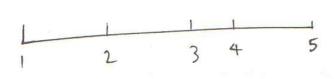


 georgebevan.com