Note-learning – why we don’t like it!

In his book Thinking, Fast and Slow, Daniel Kahneman presents the idea that we have two systems for thinking – System 1 is effortless and intuitive (fast), whilst System 2 relies on deductive reasoning (slow). Although I have not yet finished this extraordinary book (which appears also to have some leanings towards economics, which is most definitely not my field), this concept has been a revelation to me in terms of the light which it might shed on studying music, and in particular on how we practise.

In recent weeks I have asked many colleagues, friends and pupils to answer the sum 17 x 24, out loud. Several have declined even without trying: “I couldn’t do that.” Eavesdropping on others whilst they have multiplied, stored and carried their way to the answer (not always the right answer!) has been very enlightening; there is no doubt that mental arithmetic requires our undivided cogitation, even for the few who took on the challenge with no fuss. Kahneman’s suggestion that our System 2 is essentially ‘lazy’ seems to me to carry a lot of weight – most people would rather do something which comes more easily!

Is it any surprise then, that given the prospect of learning new notes, many pupils conveniently find something else to do instead?! Note-reading requires  a great deal of mental effort not only in reading pitch and rhythm, but in co-ordinating the body and at the same time trying to assess, via ears, fingers and intellect, whether we have it right or not. Having opened the score, some pupils will find it hard even to begin, whilst others might make a reluctant start but give up once they realise the scale of the task ahead. Maybe perfecting the first page would be more fun after all…!

For a long while now I have encouraged my pupils to think about three stages of practice. Stage One Practice is note-learning.  However reluctant, just a few new notes learned every day will make in-roads into the piece which the student is learning, as well as practising reading skills of course. Stage Two Practice is consolidating our recent note-learning. Once we are familiar with something, even if we only encountered it yesterday, we tend to regard it with less suspicion! Music which was new yesterday is altogether more approachable today. Stage Three Practice is refining music with which we are now quite familiar, and might even be considered playtime!

Stage One Practice is, of course, System 2 stuff – that is, hard work on the brain. By the time we get to Stage Three Practice, however, we are moving very much more towards relying on our intuition. Expert intuition can be learned, in as much as we can become so familiar with something that we just know it. Once at this level, the tough cognitive work is behind us, and things come easily. Don’t be fooled into thinking that Stage Three Practice is easy – far from it – but in pure cognitive terms it is less demanding than the early note-learning stages.

Just being aware of this concept is surprisingly helpful. I actually like learning new notes, but sometimes, especially if I’m tired, I prefer to work on more familiar repertoire. And with some students, knowing that there are aspects of practice are potentially very demanding might alter the way in which we approach helping them; sometimes it’s not just a question of time spent, but actually breaking through the initial mental barrier to take it on at all.

In the wider context, pupils who develop the habit of learning new notes every day, and are therefore readily prepared to think hard and problem solve, are surely more likely to use these transferable skills in other areas of their learning too. It strikes me as an excellent habit to be cultivating.
Fantasy Piano Recital

As a piano student, I was never taught to memorise music – in my ignorance, I think I just assumed that it was something which you could either do or you couldn’t, and since I couldn’t, I didn’t. I suspect that I was also guilty of going to piano recitals  and singularly failing to observe what I now believe to be an extraordinary feat, that of memorising a whole recital programme with apparent ease. This, coupled with the equally extraordinary technical and musical mastery which the world’s finest pianists also command, makes me wonder whether the sharing out of gifts sometimes seems a little unfair!

With this in mind, a recent article in The New York Times, which suggests that playing with the score is more acceptable these days, couldn’t have come at a worse time for me! For me, being a real pianist means all of the above, and having just discovered (okay, perhaps a little late in life!) that actually I can memorise, I don’t need to hear just now that maybe it’s not so important after all.

Learning to memorise is difficult, and requires a methodical approach with reference to the technical, aural, harmonic and visual, to name just a few of the many strands which come together to form a system which is utterly reliable. Plus determination, self-belief, perseverance, time and a great deal of hard work. I am not for a moment suggesting that pianists who play with the music are not able to convey great musicianship; it’s just that I am looking for that artistic freedom which comes from knowing the score completely. And if it proves difficult? I’ll find a way, but can’t is not an option for me. [link here to an excellent blog by Mel Spanswick on the same subject.]

In order to force my own arm on the issue, I have set myself the challenge of preparing for an ABRSM diploma this year. Candidates are required to give a 35 minute recital; memory is not a requirement, but I am adding this self-imposed element to the challenge. My ultimate objective – to be a better pianist. And along the way I am increasingly awed by those pianists who hold so much music in their heads!

He is my proposed recital programme:

Bach Prelude & Fugue in g minor (Bk 1), BWV 861
Beethoven Sonata in c minor, op.10 no.1 complete
Schubert Impromptu in G flat, D.899 no.3
Fauré Impromptu op.31 no.2 in f minor
Stravinsky Piano-Rag-Music

To help in my preparation, and in particular to gain further insights into possible interpretations, I would love some ideas for a Fantasy Piano Recital. Please feel free to nominate your preferred pianist for each of the works above ie. Bach – Glenn Gould, Beethoven – Barenboim etc. I look forward to hearing your ideas.


[subsequent progress reports here and here!]

“Is this your giraffe sir?”

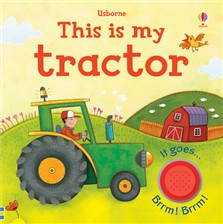
When we first learn to read, we tackle one word at a time, and hopefully as we revisit the same words again and again they become more familiar. Some longer,  less familiar words can cause problems though. This ……. is ……. my ……. ??

this-is-my-tractor

At this point, we might get stuck. ‘This’ was a tricky word compared with ‘is’ and ‘my’, but we’ve encountered it a few times before and we’re wise to it now! But the last one in the sentence, the long one beginning with ‘t’, is going to take some working out.

There is an easier solution of course, and it’s the one which we hope the more observant child will work out for himself. The answer is that on the page, along with the tricky word, there is a great big picture of a lovely green tractor. That starts with ‘tr’ – that must be it – tractor!

If the task set was to read the sentence, we just passed. Technically we might not have read the last word – we sort of guessed it – but it was a good guess, based on plenty of very strong evidence, and we got it right. Job done.

“I won a g……… at the fun fair, but sadly it didn’t even survive the journey home.”

If this conjures up the image of someone standing in a lay-by, wondering how on earth they are going to explain to the police exactly what happened to the giraffe, then I suspect that you have never been to a fun fair!

In both of these random examples, context has a big part to play in our understanding of the words. We can fill in the gaps with relative ease by drawing on additional skills which we have, aside from the purely cerebral task of decoding letters into words. We do this all the time, and I mean all the time – whatever we are doing, in fact, our intuition is assessing past experiences in order to give us the most appropriate response in any situation. In everything we do, in every moment of every day.

So why should we approach sight-reading music any differently?

All too often I encounter young musicians (and some older ones too) who are so intent on decoding the dots on the page that they completely forget to observe the context – or worse, it has never even occurred to them to observe it in the first place. These are the ones who spend ages trying to work out the word ‘tractor’ when there is a huge picture of a tractor staring them in the face!

Sight-reading needs to involve sight-understanding, even at the most elementary level. A Grade 1 pianist needs to know what key the piece is in, not in order to test her on her knowledge of theory, but much more importantly, so that she can put her hands in the right place on the keyboard. She also needs to know that if two successive notes are on adjacent spaces, they are a third apart; armed with this handy piece of knowledge, she can play the second note without reading it, but instead by knowing where it lies in relation to the previous one. If her ears are switched on, it will not be a surprise to her when the piece ends on a note which previous experience says she should expect to hear. None of these things involve reading as such, but all improve her reading enormously.

As a student progresses it is imperative that these musicianship skills are developed at the same time – otherwise they will simply find themselves wading through more and more complex music with less and less understanding. It is not all about reading, far from it in fact. It is about understanding the context of the notes, and allowing our musicianship to take some of the strain by plugging the gaps with answers based on plenty of strong evidence provided by ear and intellect – that is, just in the same way as we read words. Approached in this way (in my experience, both of doing it and in teaching it) sight-reading soon becomes much easier, and therefore more enjoyable, and we do more of it, and get even better…. Very empowering!

this-is-my-tractorCR

From Aaarrr to Aaahh – the pirate who learned to sing!

Back in September I posted a blog about one particular boy in ‘The Choir who can’t sing’ who had auditioned successfully for our production of The Pirates of Penzance. In fact, no fewer than five boys from the choir ended up as pirates in the show last weekend, which had a run of three nights and which was a fantastic success – and yes I’m biased, but I wasn’t the only one to think so – “we are blown away by the show!”

It has been a tough road. After casting, the producer and I wondered whether we had bitten off more than we could chew, since the combined musical talents of the boys in the chorus did not fill us with great hope. (Sorry we doubted you!) The initial sing through had some high points though, and I was delighted that the whole chorus, girls and boys, were so swiftly taken with the witty words and catchy tunes of this Gilbert and Sullivan classic. However, the reality soon hit home; for some – who could neither read the notes, pitch them reliably or remember them – it was looking like a mountain too high to climb. Some of the boys came to rehearsals looking resigned at best, and sometimes completely defeated.

One of the main problems was range – for boys used to ‘growling’ in the lower registers, they found it difficult to maintain the stamina required to sing at least an octave higher than usual. The other was that as soon as we were joined by the girls for tutti rehearsals, they almost invariably ended up singing the main melody rather than the bass line. Frustrating but understandable! And of course, even worse is that once you throw in the choreography, everyone stops singing anyway, at least initially!

Nothing beats practice, and especially when it is a little and often! With rehearsals set on Mondays, Tuesday, Wednesdays, Thursdays and some Sunday afternoons, the whole cast were sure of at least two chorus rehearsals every week, either sectional or together. For one particular pirate, I can’t imagine a better way of getting him singing – having never sung a decent note in his life – than doing a little every day for 10 weeks. His confidence has gone through the roof, and although he is still a little hit and miss, having been part of a show like this will have given him an immense sense of achievement which will remain with him for many years.

If I play you a note, can you sing it back?

When I see a pupil in order to practise aural tests, which I have done literally hundreds of times, the first thing I always do is ask them to sing a note. Surprisingly often it plays out something like this:

Me:  Sing this note to me please. [plays note on piano]
Pupil:  Can you play the note again please?
Me:  But I’ve only just played it!
Pupil:  Yes, but I’ve forgotten it!

The request to hear it again might even come whilst the note is still sounding! Of course it may well be that the pupil is using stalling tactics – any excuse not to have to sing. It can be scary, and I do mean that quite sincerely. Worse, however, is that I suspect that many genuinely believe that they can’t remember the pitch. At this point I have to insist, gently but firmly:

Me:  Just sing the note.
Pupil:  I can’t.
Me:  Sing it.
Pupil:  Lah! (correct note)
Me:  Well done!
Pupil:  Oh!

The thing is, unless they have genuine pitching problems they will almost invariably get it right; the only problem has been in believing that they can remember it.

Following my recent post 17 x 24? Fantastic thinking, I have been asking numerous colleagues and pupils to work out this sum for me, out loud. Quite a few, including several staff, have said that they couldn’t do that. At this point, I have had to insist, gently but firmly (!) and all have gone on to work it out correctly! This says a great deal to me about what we believe we can or can’t do, versus what we can actually do if we push ourselves a little more. In order to do this sum, we need to store a few numbers with a view to recalling them again; we might not think we can do this, but actually we can. And it is exactly the same with pitch; if we listen in the knowledge that we will be asked to recall that information, we can do it. We just need to ignore the ‘lazy’ voice in us which says we can’t!

I have been working this term with a boy who is in the Choir who can’t sing. He is preparing for a Grade 8 instrumental exam (ABRSM) in the summer, for which the aural tests are very demanding at the best of times, never mind one who really struggles to pitch notes at all. But this morning we had a major breakthrough! He has come a long way (really!) and is now 90% reliable, perhaps even more, in singing back notes in tune, although there is still some dodgy ‘wiring’ in there somewhere! However, when I have tried to get him to sing scales, he wanders way off key – although he can start in the right place, he invariably ends up losing his way very quickly. Singing up a five-note scale and back down again has been hopeless, until today that is…

This morning, having been thinking about memory, it occured to me that he didn’t have a point of reference, that he didn’t remember where it was that he was supposed to be heading back to. In effect, he was working out his sums but forgetting the subtotals as he went along. In simply pointing out that he needed to store the key note, sing up the scale and then return to that same key note, he then sang the scale in tune. It really was that easy. It wasn’t perfect, but the penny has dropped and he knows it! [Incidentally, I use solfa (do, re, mi etc) for this very reason – it helps to identify specific pitch references which are so critical to singing in tune and with understanding.]

I am still working on the wiring problem! We can be working for fifteen minutes singing basically in tune, and then all of a sudden and for no apparent reason, he will lose his way and not be able to sing back a pitch at all accurately. And then as suddenly as it went, he will be back online again. However, as he practises his singing this problem is showing up less and less often, and with this morning’s huge step forward, coupled with his a real desire to improve his skills, I am confident that he is heading in the right direction.

The joy of teaching is in the fact that every pupil is different, and whilst some just get it, others sometimes need some creative thinking on the teacher’s part to unlock their gifts.  This morning I learned just as much as my pupil, if not more!

Elbows in!

I remember being told as a young pianist that I should curve my fingers, but I can’t remember at the time thinking why this might be a good idea – I just followed my teacher’s instructions obediently.

However, I believe that it is imperative that a teacher explains why, so that their pupil understands the logic behind it; after all, it is not difficult to understand. As a pupil, I think it is probably quite easy to conclude that the reason that we are to curve our fingers is

because our teacher says so!

In reality, and certainly until we are used to it, it can seem awkward. ‘It’s diffulct enough playing the notes, it’s one more thing to that I have to remember, and I don’t see why I need to do this when it all seems, to me, to work perfectly adequately with flat fingers thanks very much!’

Nowhere is poor technique more obvious than in scales, and in particular in crossing the fourth finger over the thumb (descending right hand, ascending left hand). With flat fingers, the thumb and fourth fingers are miles apart – well, several inches anyway – but with curved fingers, they are significantly closer. To cross the thumb with flat fingers, the fourth finger has to travel through a huge arc, twisting the whole hand out of shape, and thrusting the elbow out sideways; and of course once the fourth finger has landed, the whole hand (and elbow) needs to be brought rapidly back into place. Sadly, however, I see far too many children playing scales in this way. Every third or fourth note in the scale demands this huge physical adjustment, first in one direction and then back again; when scales are tackled at speed, is it any wonder that they are so uneven and frankly just difficult to play? Is it surprising then they these students find scales difficult and frustrating? And don’t get me started on arpeggios!!

The best demonstration of this problem is to shake a pupil’s elbow whilst they are trying to play a scale, and insist that they keep going whatever happens! The results are hilarious, but there is also an instant penny-dropping moment when they realise that this is what is actually happening when they play with straight fingers.

With curved fingers, the fourth finger can travel in a straight line from where it was (already very close by) to just over the thumb, with no need to move either the hand or the elbow. Just hugely efficient and effortless. Why would you play in any other way? Well, the only reason I can think of is if the teacher has not explained the rules of the game properly, which seems a little unfair to me. It just takes a few moments to explain, and it will transform a child’s playing.

What’s 17 x 24? Fantastic thinking!

This week I have been asking my piano pupils (to their initial surprise – ‘this is a piano lesson!’) to work out the answer to 17 x 24, in their heads, talking me through their calculations as they go. Most go for something along the lines of:

10 x 24 = 240
5 x 24 = half of 10 x 24, which is 120
add the 240 to the 120, that’s 360
2 x 24 = 48
Finally add the 48 to the 360, and the answer is 408.

This system 2 thinking requires us to be able to hold pieces of information in our head whilst we manipulate other information, and then to recall them when needed. In fact, our heads are crammed full of facts and figures which have been stored there, and mental arithmetic is a good way of demonstrating how this works (or doesn’t!) Problems arise when we get to the end of the sum, and realise that we can’t recall one of the components; then we have to work it out again, and hope that in the meantime we don’t lose a hold of anything else which we are going to need to complete the task.

When we are learning a new piece of music, we are essentially doing just the same thing as detailed above. Each melodic shape, chord or rhythm is a small piece of information which can be stored in our head, with the specific aim of also being able to recall it. Unlike numbers, these elements have numerous other qualities – for instance sound and pitch, visual appearance (both on the page and on the instrument), feel – which can be an additional help in storing them reliably.

Having started each lesson this week with a maths problem, I have then given each pupil a new passage of music to play. Rather than just wading through it in blissful ignorance we have looked in detail at those melodic shapes, chords and rhythms, with a view not just to playing them, but also to remembering them. Having just come from a task in which they know that they are required to store information carefully, each student has been remarkably attentive in memorising each detail.

fantastic

A brief example (for a pupil working at approximately Grade 7 standard)

  • In the left hand, after an initial middle C, the first minim chord is E flat minor (all black notes.) The physical sensation of playing and lifting the chords whilst holding the bass note is very memorable.
  • The bass note in the bar 2 is a fifth lower than middle C (basic theory, fifths apart are either both on lines or both in spaces).
  • In bar three the chord looks like a triad of D flat major, with the colourful sound of an added C. (The chord shape is white / black / white / black)
  • Bar 4 looks like a G major chord (the dominant, which will inevitably lead back to C) – but the D# makes it into an augmented triad – good opportunity to learn/revise this.
  • In the right hand, the melodic shapes in bars 1-2 have all sorts of elements which will aid memory. The first two pairs rise, the second two fall; the finger patterns are the same for each pair (1-2, 1-2, 4-3, 4-3); the first pair are white notes, the second pair black etc,
  • Choice of fingering helps not only in playing the notes, but to instil a strong feel for the shapes.
  • Bar 3 is the same chord shape as the LH (my pupil has already noticed!) and just leaps an octave. Again, a swift roll of the wrist makes it instantly memorable, and after one more glance the pupil is no longer looking at the music.
  • Bringing finger 2 over to land on the B in bar 4 is actually fun! And of course it’s a B, because that’s the leading note of C which is where the music is going to return to.

Most significantly perhaps, having worked with each hand separately (and it really didn’t take that long) I then took the music away and my pupil pieced together all 8 bars, hands together; not fluently, but entirely accurately, and with all the LH syncopated chords in the right place (which we had not even discussed). Teacher impressed + pupil empowered = success!

It’s gone off the top of the screen by now, but can you still remember the sum in the title, and the subtotals which you stored to get you to the final answer? It’s not a difficult sum, but it does require us to summon up what Daniel Kahneman calls ‘effortful mental activity.’ In short, it’s hard work but we know we can do it.

Our memories are amazing, and if they can store a few numbers – 240, 120, 360, 48 – then why can’t they store E flat minor, perfect fifth, LH ‘pivot’ feel, roll of the wrist, leading note? Fact: they can. This can be introduced at the most elementary level, and indeed it should be – even just covering the music and asking the pupil what the first note was will begin the process of encouraging them to use their brain to store and recall, which is developing an enquiring mind. Minus this recall, they will have to be resigned to working it all out again, every time, which is arguably even harder work, and not in the least bit empowering. In my experience children love to be challenged, and we should do some of that every lesson!

Thinking, fast and slow


I am currently reading an amazing book by Daniel Kahneman called Thinking, Fast and Slow. He presents the idea that we have two systems for thinking – System 1 is effortless and intuitive (fast), System 2 uses deductive reasoning (slow).

An example of Thinking Fast might be in recognising something, a car for instance – we just know it’s a car! Thinking Slow might be finding the answer to a sum, say 18 x 23 – we know it’s a multiplication sum, and how to do it, but we also know that it’s going to take considerable mental strain to hold various subtotals in our head before we arrive at the answer – and indeed it does!

However, Kahneman goes on to suggest that, with sufficient training, we can reach a point where we have expert intuition. It strikes me that, in my own field, this might be called musicianship! I am particularly interested in how we can strive to attain this expert intuition, especially with regard to the transition from reading the score to memorizing it.

The quote on the front of this book – “a lifetime’s worth of wisdom” – is pretty spot on. There are numerous things to share, but I particularly like this line:

anything that occupies your working memory reduces your ability to think

In short, processing all of those notes on the page takes a huge amount of our working memory – in Kahneman’s terms, it takes a great deal of Slow Thinking to make it all happen. The better way, I’m sure, would be for us just to be able to trust our instinct and play, but realistically that’s probably not going to happen. Unless, of course, we have that expert intuition (aka musicianship). There are a whole host of ‘back up’ devices which the musician needs to develop, which support and ultimately should replace the note reading element in our playing. Individually they might all seem rather trivial stuff that we just have to learn; theory, aural, scales, diminished sevenths… But actually, these things are the building blocks which develop that intuition, that musicianship. If we can recognise a dominant seventh chord for instance, and know that it is likely to resolve to it’s tonic, then we will know that A7 falls to a chord of D – and then it is less of a surprise to find that we are playing notes which fit with D major. Of course we can read them too, but this little bit of learned knowledge gives us a hint of intuition to back up the reading bit; in other words, the notes which we play are not longer a random coincidence, but we actually understand why they are how they are! And if we can hear the dominant seventh as well, then our ear might also give us a few suggestions as to what sort of sound to expect next. A little harmonic knowledge and aural skills combined will go a long way, to the point that we may well find that we arrive at the right place before we even read the notes!

Even before discovering Kahneman’s book, I realise that I have subscribed to his way of thinking for some time. I have often thought of memorizing music as having installed it on the hard drive, as opposed to accessing a memory stick (oh, the irony of a name!) The difference is that we hear the computer whirring as it processes the information on the memory stick ie this is Slow Thinking. If we can install the notes on our hard drive, that is, memorise the music, then Fast Thinking becomes a very real possibility. And the way to do that is to develop an expert intuition, our understanding of how the music works – our musicianship.

By the way, the answer is 414!

Memory – easy in theory?

When children first learn to read, they work out one word at a time, and it can be very obvious to the adult that, although they might eventually reach the bottom of the page, they haven’t actually taken in the meaning of the words which they have read. Reading each word has demanded their entire focus, and has not been understood in context. As they become more familiar with the way that language works, they become increasingly fluent, and eventually we hope that they will read with understanding, and with a rise and fall in the intonation of the voice which further enhances the meaning not just of the words, but of whole phrases and paragraphs.

My pupils are very familiar with the phrase ‘know it, don’t read it.’  In other words, if they are having to work out each note afresh every time they encounter it, how well do they really know the music? There are two distinct levels here: we might be able to play a piece faultlessly from beginning to end, and therefore know the music, in as much as we know what all the notes are, what order they come in, the correct rhythm etc. But in the same way as the child in the illustration above can read the words but not understand them, I would question the merits of teaching a student to play a piece without also helping them to understand the wider context in which the notes are found.

The simplest way to test whether our pupil really knows the music, of course, is to take the dots away!

I find that the first response is usually ‘I can’t do that!’ However, a few choice questions from the teacher might provoke a different response: ‘Can you remember what key the piece is in?’ What note does it start on?’ ‘Can you sing back the first part of the tune?’ Questions like these can help the pupil to realise that actually they can remember some of the music, but much more significantly, they might also find that a little theory helps them recall it. If the piece is in F major, it begins to make sense that the first bass note is F and the melody starts on A, since both fit in the chord of F major.

This is one tiny example – but I firmly believe that children can be stretched, and that they can and indeed enjoy being stretched – it’s exciting and enabling. Especially if they believe that their teacher believes that they can do it. And believe me, they can!

Taking the music away gives us all sorts of excuses to find endless ways of remembering the music; children are endlessly resourceful and they are also amazingly inventive, but whatever way they might come up with, they are now investigating the music in a new way. Before, all they had to do was decypher the notation, nothing more – a potentially daunting exercise but little more than that. Now, they have to enquire, to search their mind for connections between the notes in order to remember them. And it is this which will open their eyes and ears to the way in which the music is put together; keys and chords suddenly become useful guides, rhythms need to be internalised, the ear might remember something which the fingers did not. Pianists can look at the keyboard and see patterns there too.

This is how I love to teach music theory and aural. Not at a desk with a pencil and paper (although I do love that too!) but at the same time as learning the music. The music, not just the notes.

Don’t play the notes… Play the meaning of the notes
Pablo Casals


‘My piece is in…F? G? Er, I don’t know!’

My current preoccupation with memory has not only had a profound effect on my own playing, but just as significantly, on my teaching too.

Let’s suppose that a pupil is learning the melody line of a piece. The first objective would generally be to practise this line until it is fluent. But once they can do this, it is perhaps worth asking how much have they learned? Well, they’ve learned to process the notes so that they can read (accurately and in real time) what comes next, so that there are no mistakes and the melody flows. They might also have included accurate dynamics and phrasing, which will capture the necessary rise and fall of the line so that the composer’s wishes are fulfilled. Job done. Really?!

Now take the music away. Can the student remember which note the melody started on? No? So let’s ask the same question again – how much have they actually learned? I’d argue very little, if anything; they haven’t learned anything about the music – all they have been doing is reading it, but nothing has been retained, internalised, remembered. They haven’t learned the music at all, just how to play it; and these two things are very different indeed!

If they can remember the first note, how much more follows that? Not much, or a surprising amount? And do they know how they are remembering it? Is it because the melody rises in a scale, or maybe an arpeggio? If so, what key does that scale or arpeggio belong to? Can they tap the pulse?  Does a particular finger pattern help them to remember the next bit, or maybe, for pianists, the pattern is of all white notes except for the final one which is black? Perhaps their muscle memory fails them, but they can pick out the rest of the melody by ear? All of these are potential triggers to help the memory, but they also ensure that the student is constantly analysing what is going on, possibly from multiple angles. If this isn’t developing an enquiring mind, nothing is!

I am not suggesting for a moment that a weak pupil, or even a talented one for that matter, should be told that she should instantly be able to memorise a whole piece, with no help, all in one go, by analysing numerous, complex elements of music which they might barely be aware of. What I am suggesting, however, is that by introducing a little memory work into our lessons, we can ensure that our pupils are investigating for themselves how the music works. Over time, they will begin to develop an understanding of phrase structure, chords, sequences, as well as improving their aural and analytical skills – in fact, there is a pretty endless list of things, all of which will enhance their musicianship. That’s much better than just learning to play the notes with little idea of what is actually going on.

In terms of teaching time, I don’t find that asking a question takes any longer than giving an answer; ‘What dynamic does the music change to in bar 5?’ (said whilst swiftly covering up that bar) takes no longer than ‘Remember to play forte in bar 5′, but the difference is that the former requires the student to think, and thinking is good!


for further reading (!), follow this link to The 5Es for outstanding instrumental teaching