Category Archives: musings

general thinking space!

Directed practice – a guiding hand

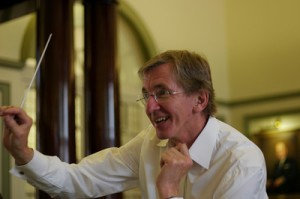
alan-conducting

Alan Hazeldine

As a student I had the good fortune to cross paths with Alan Hazeldine, an inspirational conductor and a generous teacher. In the year or so that I was accompanist to the North London Chorus [my first concert with them was Bach’s B minor mass] I learned a huge amount from him, but this single idea stands out above all else.

Alan held out his left hand, palm facing upwards:

In one ear, I have what I can hear at the moment, in rehearsal; and in the other ear [waving his right hand] I have what I want it to sound like. And all I am doing in rehearsal is matching up what I can hear with what I want to hear.

As he said this last sentence, he carefully put the palms of his hands together. So simple.

This is how I rehearse, be it choir or orchestra, but it is also how I practise. In fact, this is how I have always practised. I’m not sure whether I was ever taught to practise or whether it has just come instinctively, but many pupils do need guidance. Some need lots.

I suspect that one of the biggest problems with practice is that pupils lack the aural picture of “what they want it to sound like.” In Alan’s picture, they have their left palm held out, but have nothing to match it up to – in other words, their practice is aimless. If they can’t hear the goal – whether that be an evenness of tone, or even just the correct notes, how can they know what needs to be adjusted to improve their efforts?

This is a complex area. Many students hack their way through sight-reading without the faintest idea of what is going on around them. Why? Because they can’t hear what they are aiming at, so nothing that they play has any context; they can’t really tell whether it’s right or wrong. The solution: teach them to sight-sing, and then they will be able to hear what they see.  Then they will be able to match up what they play [left hand] with what they hear in their head [right hand].

I have inherited a pupil who struggles to read the dots on the page. He can read them, but he has developed other strategies to avoid doing so if he can help it! So when it comes to reading new music, the first stage needs to be for him to pick his way carefully through the score, and build for himself an aural picture of what the music sounds like; put another way, he first needs to create that right hand, so that in his subsequent practice he knows what he is aiming for.

These things take time, and we can undoubtedly find shortcuts. The easiest is to provide that right hand ourselves, to be in possession of what we know to be the goal, and to guide our student towards that. There is, however, a fundamental flaw with this strategy: what does the student do when we are not there? This method works fine in lessons, when indeed we can be fooled as we see their progress in front of our own eyes, but what about when they are practising alone? And what about when they move on?

My preference is not to find shortcuts, but to give them a hand in working out how to learn for themselves. It takes time and patience to teach our pupils how to direct their own learning rather than simply to follow our lead, but the rewards are so much more enduring.
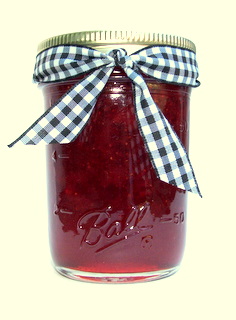
Do you like Strawberry Jam?

Malcolm Gladwell’s Blink is “all about those moments when we ‘know’ something without knowing quite why we know it,” when we rely on instinct rather than our ability to reason. Gladwell is a persuasive writer and I find him compelling. He draws on a huge variety of examples in this book, but nevertheless I was quite surprised when I suddenly found the topic turning to strawberry jam!

In short, jam experts were asked to rank forty-four different jams, and then a group of college students were asked to do the same. How close would their results be? To cut a short story even shorter, quite close it seems: “Even those of us who aren’t jam experts know good jam when we taste it.” But then they asked the students to give reasons for prefering one jam to another. Disaster. “It’s simply that we don’t have any way of explaining our feelings about jam” says Gladwell.

So, how comfortable would you be in describing the texture of jam, or it’s colour intensity, lumpiness or shine?  Food experts can be required to describe as many as ninety categories and sub-categories, each on a 15-point scale! The point is well made – we need vocabulary and huge expertise to be able to do this.

jamNow I’d forgive you for thinking you’d accidentally stumbled across jam@me, so I’ll spare you any more detail (you could read Blink yourself, of course.) But here’s my point: how do we teach musicianship? “Even those of us who aren’t trained musicians know a good performance when we hear one.” But teaching musicianship is an altogether different matter. In order to teach it, we need to be able to break down the ‘ingredients’ [reference to jam entirely intentional, Paul Harris suddenly makes even more sense!] so that we can describe to our pupils, accurately, how the music works. Texture, form, structure, harmonic rate, lumpiness, melodic shape….. everything. And as the experts – teachers are experts aren’t they? – surely we should have all of this vocabulary to hand, otherwise aren’t we reduced to the ranks of someone who just knows which jam they prefer? And then, don’t forget, it’s not just the teacher who needs to be familiar with this vocabulary and able to use it – the pupil needs to understand it too. Teacher and pupil need to be conversing continually in the vocabulary of musicians. Anything less, and we’re not really getting any nearer to teaching musicianship. Perhaps just tasting it.

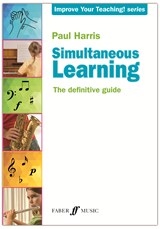
If there is a book, Strawberry Jam – the definitive guide, for jam enthusiasts who really want to know how to move from knowing what they like, to knowing why they like what they like, then I suspect it’s very similar to Paul Harris’ new book, Simultaneous Learning (also, funnily enough, subtitled ‘the definitive guide‘) which teaches music teachers how to teach musicianship. It isn’t enough to be a brilliant musician, and ‘knowing something without knowing quite why we know it’ is not actually going to help our pupils. What I love about Paul’s teaching philosophy is not just how positive it is, for pupil and teacher alike, but that at the same time there is a constant focus on what makes music work. After all, if our pupil can play the right notes but has no idea really how to describe what is happening, is she any the wiser?

The emphasis is on the teacher leading this process, which means that the teacher needs to be thinking about these things too, rather than just knowing them. I find that really exciting; it’s not only about me teaching the pupil, although that is, of course, important! It’s about me learning, all the time, how to translate something which I just know into something which my pupils can understand too.

I can’t hear it when I play it

I have taken to sticking post-it notes on my piano, and noting down some of the things which my pupils say in lessons which I think might come in useful, perhaps for another pupil. One such note has been up there for several months now – it says “I can’t hear it when I play it.”

Sometimes coordinating everything when we play the piano can take so much mental effort that we just can’t spare any thought for what comes next. It’s like our field of vision is reduced so that we only see the moment which is happening right now, the very chord which we are desperately trying to decypher. Not unlike a young child reading a long and complex word like

i ma gin a tion

So much focus goes on processing each individual syllable that the sense of the word is lost completely. But suppose we gave the child the first bit – imagine – and then asked them to read the a – tion bit. Being able to hear the bigger picture would enable them to read with relative ease.

So today with my piano pupil I asked her to consider this: “can you hear in your head how the next little bit goes?” The answer was a clear yes. So then we played the phrase again, and this time I asked her to make sure that she was thinking ahead and hearing the next bit before she got there, not as she played it. Success!

There is a fine balance between learning to play the notes and learning to hear the notes. Personally I think that just playing the notes can be overrated, especially if this is at the expense of everything else. Training the ears should come first.

A growth mindset – semiquaver stamina

How often do you find yourself thinking I could never do that? I’m generally someone who is prepared to do my best to work through things, but there have often been things which have held me back because I simply haven’t believed that I could overcome what have seemed at the time to be insurmountable difficulties. Two years ago I set about changing this. In preparing for the dipABRSM piano diploma, I systematically broke down the whole concept of memorisation in order to learn an entire 35 minute programme of solo piano music from memory. It worked! But not without a huge amount of time invested in the process. And more importantly, discovering the belief that I could find a way to overcome a seemingly impossible barrier.

This process has had the most amazing impact on my learning since then, and when I encounter problems I now look at them in a completely different light – not I can’t do this, but wow, this is a tricky one, but there must be a way somehow, and I’m not going to rest until I find it. Now that I’ve tried and tested this on me, my main focus is to pass on this knowledge to our students; to help them to discover that nothing is impossible. In the words of Paul Harris, to dispel the ‘myth of difficult’. If I can’t do something, it’s only because I haven’t worked out how to solve it yet.

I’ve been working with one of our music scholars recently on a Bach flute sonata [E minor, BWV 1034] and one of the things which has eluded her until now has been the epically long semiquaver passages in the final allegro.

e minorIt looks like a physical stamina issue; by half way through the second system, she is beginning to flag. But actually the real problem is that every time she fails, a little bit more of the fight goes out of her, to the extent that, when she begins the passage she doesn’t ever believe that she’s going to get to the end in one piece. The biggest problem is that it’s not a physical or even just a techinical issue, but a mental one – her self belief. Without that, she’s never going to succeed.

So the solution is to start at the end. We play bar 7 and the first note of bar 8. Just that much. Nothing difficult here. We play in dotted rhythms, all the usual games, and also from memory. Now we play bar 6 (including the first note of bar 7 to make the join) in the same way, and then we join those two bars together. Surprisingly then, there is no problem with bars 6 and 7; the only reason that they are difficult is that they follow three or four of similarly relentless semiquavers. Played on their own they’re absolutely fine, and so practising bars 6 and 7 for a while begins to break the failure cycle.

Put another way, bars 6 and 7 are a little like the sprint finish at the end of the 1500m. Every time we run, the race falls apart as the whole field come streaming past in the final straight. Sensible training would surely include some focused work on the sprint alone.

Back to the passage, we practise bars 5 and 6, and then 4 and 5, and 3 and 4; and then 5, 6 & 7, and then 4, 5 & 6 etc. It all works fine, and the notes are not difficult. Then finally 3-7, the whole race. And first time, she nailed it. Completely nailed it. Moreover, bars 6 and 7 were thrillingly exciting, and I could hear in her sound that as she neared the end she knew, she believed that she was going to get to the end successfully. Musically this added a whole dimension too, with that growing sense of urgency [not rushing, just energy] giving real forward momentum to the phrase.

One of my greatest regrets (being very honest here) is that it has taken me so long to work out that nothing is too difficult. I have spent the best part of twenty five years looking at certain pieces of music and thinking no, I couldn’t play that. That’s a long time wasted! Still, there is plenty of time ahead, and most importantly to me now, plenty of time to instil in a generation of young people that they can. This is the joy of teaching – I hope I can make a difference.

Developing a vision

In May 2012 I posted a simple vision statement on my (new) blog). At the time, this was completely new territory for me. I had ideas – lots of ideas – but articulating them in a way which would allow others to share in that vision has never occurred to me. With hindsight that now seems ridiculous! More importantly, I have been surprised at how central this simple vision – “enabling every pupil to find their own voice – has become everything that is important to me as a teacher. And I believe in it wholeheartedly.

slbookThis Thursday I had the great privilege of going to the official launch of Paul Harris‘ latest book, Simultaneous Learning, the definitive guide. It is, quite simply, a brilliant book by a brilliant man; and at the heart of Paul’s teaching philosophy are these four things:

  • Teach pro-actively
  • Teach through the pieces’ ingredients
  • Make connections
  • Empower, don’t control or judge

I really can’t recommend Paul’s teaching highly enough, and I would encourage anyone who teaches music to read Simultaneous Learning. And that’s largely because his style of teaching focuses on exactly the same things that I am so passionate about! Engage, Enthuse, Enquire, Equip and Empower.

I feel extremely honoured to have written the Foreward for such an important book. Well what are you waiting for? Order a copy now!

How to practise, part 2: Style of lesson = Style of practice

I was looking back on some notes which I took in a recent talk by Paul Harris, and came across this: style of lessons = style of practice. I can’t believe it’s been sitting unnoticed in my notebook for the past few months – such a significant statement.

I love it when a pupil comes to a lesson and, almost before they are through the door, have their score open saying I’ve been having trouble with this bit here, can you help me with it? It shows that they have identified a problem, which in itself is a good thing, and that they know that I will be keen to help them fix it. But the lesson should not be just for fixing problems – it should be to teach the pupil to fix the problems! From my perspective, many problems are easy to fix; but the best way to make practice effective is to teach our students how to problem-solve; in the lesson, with us to guide them. Not just for the sake of solving whatever issue they have, there and then, but rather with a view to giving them the thinking skills to tackle anything which comes their way. The last thing we want is for them not to be able to use their practice time because they don’t have the confidence and strategies to have a go for themselves. In my book there is nothing better than a pupil who is willing to have a go at solving a problem for themselves. Nothing.

The other issue with using the lesson just to solving problems and fix mistakes on the students’ behalf is that the lesson itself surely then becomes a series of corrections. That’s wrong, did you notice? Let’s fix it. It all sounds very positive, very constructive, but reading between the lines surely we’re saying you don’t seem to be able to fix it yourself, I’ll have to do it for you. This is not empowering, far from it. It tells the student that they can’t do anything by themselves, and that much of what they bring to lessons is wrong, and is duly criticised. Ouch.

Some of the most effective tools in any lesson are the most simple questions: where is the problem? exactly what is the problem? how can I fix this? has that done the trick, is it better now? I ask these in every lesson, all the time. Demanding maybe, purposeful definitely, but I can direct the lesson in such a way that the student eventually finds that, having asked the right questions, the outcome is a successful one. I ask these questions so often in lessons that eventually they can’t help but find themselves asking the same ones during their own practice time. And finding solutions too.

My lessons are in many ways just a more energised or energising practice session. My pupils come each week having asked questions of themselves all week – so there is plenty of opportunity for praise in the lesson. And at the same time, plenty of chance to influence their practice for the following week too: what did you try here? has it worked? how about thinking of it like this? The last suggestion is, of course, the perfect opportunity to offer some new ideas, but even then it is as part of a collaborative effort between teacher and pupil. All the time, we are both working towards the same goal, and all we ever need to know is are we getting nearer to that goal? But is shouldn’t be me who does all of the work, far from it.

Sight-reading – are we making it up as we go along?

I am a keen chess player, but I wouldn’t rate myself as particularly good. My dad taught me to play chess when I was young – although I suspect that a more accurate way to describe it would be that he taught me how each piece moves, and to take care not to lose pieces too readily (although this still happens even now!) To be perfectly honest, I find the whole concept of teaching someone how
to play chess – that is, how to really play – a bit of a mystery. I think I’ve learned a few things over the years, mostly by trial, error and humiliating defeatchess pieces, and I’m still hopeful that the more I play the better I’ll get. But I have no doubt that what I really need is some quality teaching if I am to significantly raise my game.
When it comes to sight-reading music, I wonder how far different our approach is? Read the key signature, choose a steady tempo, keep going if you can. Perhaps with some (unhelpful?) comments along the way – “that should be F#”; “nearly; well done, keep going!” And probably the least helpful of all: “okay, not bad, let’s do some more next lesson.”

To make a significant difference to the level of our pupils’ sight-reading, two things need to be happening. The first is that it needs to be taught. We need to give our pupils plenty of strategies to help them along the way, so that they feel able to make progress rather than just struggling through yet another sight-reading test in the vain hope that it might be better this time. I believe that the real key here is understanding, and not at a superficial level either. Aural skills are also vital, so that the student can use her ears and her musical experience in addition to simply reading the notes; in my experience, once a student can hear the key signature, they are beginning to sight-read much more effectively. A clear understanding of pulse is critical, and if this hasn’t clicked with the student yet (forgive the pun), then this needs addressing first – without it, reading all but the most basic of single line rhythms is fraught with difficulties. Even the most simple of strategies can make a world of difference if we take the trouble to share them – take nothing for granted!

The second thing which needs to be happening is practice, and lots of it; the more you read, the more fluent you will become, especially if in the meantime there is good teaching taking place alongside. I will quite often hand a Grade 2 sight-reading book to a Grade 5-ish pianist with instructions to play through every test before next lesson – or even better, learn every test. It can be a huge confidence builder, and can also give us the opportunity to go back a few spaces if necessary, and point out some of the basic elements of the music. Simple harmonic patterns are generally easier to identify in the more elementary tests, and once introduced can really help musical understanding as things get more difficult. Easier tests can also be easier to sing, and if you can sing it, you can play it!

Teaching our pupils to sight-read is empowering, and yet we seem to spend a disproportionate amount of our teaching time on repertoire. Whilst the average 15 year old child might have spent x hours reading words, both in school and at home, it is worth considering how many hours that same child might have spent reading notes. For the average child, it is likely to be very significantly lower. We need to take this into account, and continue to take every opportunity to nurture their basic understanding of how music is put together – otherwise a huge gulf appears between what they can ‘perform’ and what they can actually understand and read.

How to practise, part 1

Over the past couple of months I have been immersing myself in the whole issue of music practice. I don’t have all of the answers, but I have had a few lightbulb moments, the first of which is this: just do something!

Inevitably there are always some pupils who will practise regularly, either because they are self-motivated or simply obedient. At the other end of the scale, there are some who just do nothing. It might seem obvious, but this group just aren’t going to make progress at all – how could they? So without even thinking about how effective their practice time might be, I have started at the bottom with the simplest of targets – do something… anything! This approach has a process driven outcome. In other words, success can be measured just by doing it. One of the most difficult issues with practice is that we have to address our shortcomings on a moment by moment basis, which I am certain must be the single reason why most people don’t enjoy it that much. But if the target is just to show up, get the instrument out of the case and blow down it for ten minutes, it’s actually going to be quite difficult to fail.

With this in mind, we now have a sign in book in our music department and pupils are asked to sign in and out each time they come in to practise. The same rules apply as above; some are keen and sign in like clockwork, and others won’t, or forget, or don’t see why they should. A few, after six weeks of term, don’t even know that the book is there….!

Now I did say that I’ve been immersing myself in this…? Each week I go through the sign in book and add up how much practice each pupil has done! It’s not an exact science by any means, but over the course of six weeks it has given me an extremely good idea of the practice habits of every pupil in the school, and they know this – and so do their teachers.

It has been a very enlightening experiment, and there are two things in particular which have become very apparent. The first is this: it puts practice out there, in the public domain. It is no longer a mystery, with teachers and pupils playing weekly games trying to ascertain or cover up how much practice has or hasn’t been done. Remember, we’re not yet addressing the content – just time spent. But with this sort of transparency, practice in on agenda and there is a clear message that everyone should be doing something.

The second is that it is clear to all that a sizeable number of students are really putting in the hours each week – and it is equally clear to me that the ones who put in the hours are the ones who are making progress. And it is good for our younger or less experienced musicians to consider whether our music scholars are just talented, or whether their success might also be due to the fact that they spend lots of time practising.

Reading notation: Know it, don’t read it

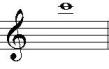
I have recently taken on a new piano pupil, and I was surprised to see that in several passages of a piece which he had been learning he had written the names above all of the right hand notes. Most of these notes were on leger lines above the treble stave, and he had evidently found these difficult to read – well they are more difficult to read aren’t they? 

Ledgerlines

However, what he had failed to notice was that the left hand was just an octave lower than the right throughout. Which means that he didn’t actually have to read the right hand notes at all. He could play it okay, but I just don’t think it had dawned on him that a little bit of knowledge (in this case simply ‘hands an octave apart’) was much more helpful than knowing the names of all those notes.

This is a classic case of being so concerned with reading the score that we forget to observe the glaringly obvious. When I pointed this out, he was equally bemused as to why he had written on his score!

I set him a new piece to learn: To a Wild Rose by MacDowell. He did a brilliant job of learning it in just a week, but to my surprise he had written in all the note names in the right hand, just for a couple of bars.

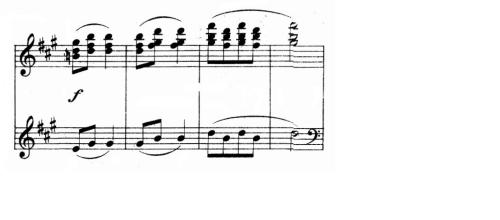
wild roseHe was relying entirely on his reading skills to help him to recall these notes, and as already highlighted, leger lines aren’t his favourite! But there are other things which can help here:

  • we noticed that the bottom line traces a chord of E7, and the top line is also a succession of rising thirds
  • the first two bars have sixths between top and bottom notes in the right hand, and these extend to sevenths in the second two bars
  • the physical shape of the right hand chords, and in particular the different combinations of black and white notes, enable us to remember what they look and feel like.
  • a second finger on the B in the third bar gives a secure link between the alternating chords, again helping to forge a physical connection between the two chords

Taking a passage like this apart, and noting all of the musical, theoretical, physical and aural connections, will ensure that we really know it. And in many instances, our aural or memory skills might be better than our reading skills, in which case why rely solely on the reading skills? In short, we shouldn’t; we need to be prepared to use all of our musicianship skills, all of the time.

Reading notation: If you can’t say it, you can’t play it

When learning a piece of music – and when teaching a new piece of music – I always consider how I can make things as easy as possible, and this invariably means breaking the music down into tiny pieces so that every element is as simple as possible. For a pianist, that might well mean separate hands, but even beyond that it might be to break down each bar so that we can identify different hand shapes, finger patterns, harmonic outlines, interval relationships and so on. Paul Harris would call this making connections. This turns reading into learning.

When it comes to rhythm, this might also mean putting down the instrument and just dealing with the rhythm bit. After all, if you can’t even clap or sing the rhythm, or even just say it, then what are the chances of being able to play it on your instrument? Zero, I’d say.

Some of my pupils are quite surprised when I first ask them to take their hands off the keys and work at the rhythm by itself – after all, this is a piano lesson, and singing or clapping can be a little embarrassing! But they soon realise that actually it’s really helpful to know how the rhythm goes by itself, and that it’s a lot easier because they have less to think about.

Last week I found myself helping a pupil with a difficult rhythm in a Field Nocturne – 4 against 3. Having practised hands separately – the right thing to do – she had been trying her best to put the two together, but was frustrated that it wasn’t working. The reality was that she just didn’t know how the two parts fitted together.

IMSLP272546-PMLP24011-field_8_nocturnes_349854157

First things first; dealing with a complex rhythm and that mobile left hand accompaniment is just too much to cope with, so let’s remove the pitch element. In fact, let’s just take the piano out of the equation altogether and just deal with the rhythm by itself. I suspect that this idea doesn’t always occur to the instrumentalist, but it should.

Stage one is to work out how they fit together. They say that maths and music go together, and I guess this is what they mean! 4 against 3 looks like this:

4 against 3

Practise tapping left and right hands on knees until fluent.

Stage two, let’s sing the melody line so that we actually know how it goes, rather than just being able to play it – two very different things.

Stage three. A fusion of the rhythm and melody – but still no piano. We sing the right hand melody, and either tap the left hand rhythm, or better still, sing that too! So we end up singing the top line (down an octave, obviously) and doing our best to sing it in tune, and also saying/singing badly the left hand in the correct rhythm. Clearly it’s impossible to sing a two part piano piece, but in essence we’ll do our best. The most important thing is this: although the singing itself might not be brilliant, it represents what is going on in our inner hearing, and if it works in there, it will work on the outside too.

Stage four. If you can say it, you can play it! Now that the whole thing is mastered, we simply add the element of playing the notes.

In real time, this took about 10 minutes of the lesson, maybe 15. And in this time, we didn’t touch the piano. Does that matter? Not in the slightest, this is a music lesson. The best bit is that, having done the hands separately work already, it went together instantly, and I do mean instantly. With a huge smile!