Category Archives: teaching

Are you answering the right question?

According to Daniel Kahneman, when posed with a difficult question, we can have a tendency to substitute an easier question and answer that one instead. Without noticing!

questionmarkIf that sounds unlikely, consider the way in which some children tackle their music practice. “I still can’t play this section, so what am I going to do to solve the problem? I know, I’ll practise it slowly (like my teacher has told me to!)” This student might be praised for having a considered approach to his practice, and also for following his teacher’s advice. The trouble is, if as a pianist he has chosen poor fingering which really doesn’t work, no amount of slow practice is going to solve the problem. Sadly, what he has actually done is find a much easier answer to the wrong question.

I have written before on the subject of developing an enquiring mind, which I believe to be vital if our pupils are ultimately to stand on their own two feet as musicians. To practise effectively, students need to learn not only to ask questions, but to ask the right questions, time and time again.

I find it helpful to consider all of the potential decisions into an imaginary flow chart, which might include questions such as:

  • Does this passage need work?
  • Where exactly is it going wrong?
  • What, exactly, is the problem – wrong note, technical issue etc
  • Can I try something different?
  • Does this new method make it better, worse, no difference?
  • Have I fixed the problem now, or do I need to find some more questions?

The point is that just one question – “is it getting better?” – is not enough. The right question is “how do I improve it?” – this question has the potential to generate many more questions and even more answers. And it takes ‘effortful mental activity’  (‘system 2’ thinking) to ask these, and even more of the same to ensure that the correct solutions are pursued. Our pupils need to realise that the decision-making required here is constant, and we need to be modelling this for them constantly too. In short, practice is demanding, but with this degree of purposefulness it can also be extremely rewarding.

We need to teach our pupils to think like this. I often tell my pupils that I consider that my role is to teach them to think, not to play the piano! That’s not strictly true, but actually the ability to think for themselves will be far more helpful to them than just knowing how to play a piece of music. How much do they gain if I, the teacher, am the one who has worked out for them how to solve all of the potential difficulties along the way? Very little I think. Once a student knows how to make constructive decisions which can guide their practice so that it is productive, they will fly –  and not just in their musical studies but in everything, since these skills are of course transferable. And we are being told that Music is not an ‘academic’ subject – how ridiculous.
“Is this your giraffe sir?”

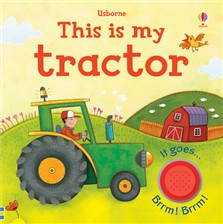
When we first learn to read, we tackle one word at a time, and hopefully as we revisit the same words again and again they become more familiar. Some longer,  less familiar words can cause problems though. This ……. is ……. my ……. ??

this-is-my-tractor

At this point, we might get stuck. ‘This’ was a tricky word compared with ‘is’ and ‘my’, but we’ve encountered it a few times before and we’re wise to it now! But the last one in the sentence, the long one beginning with ‘t’, is going to take some working out.

There is an easier solution of course, and it’s the one which we hope the more observant child will work out for himself. The answer is that on the page, along with the tricky word, there is a great big picture of a lovely green tractor. That starts with ‘tr’ – that must be it – tractor!

If the task set was to read the sentence, we just passed. Technically we might not have read the last word – we sort of guessed it – but it was a good guess, based on plenty of very strong evidence, and we got it right. Job done.

“I won a g……… at the fun fair, but sadly it didn’t even survive the journey home.”

If this conjures up the image of someone standing in a lay-by, wondering how on earth they are going to explain to the police exactly what happened to the giraffe, then I suspect that you have never been to a fun fair!

In both of these random examples, context has a big part to play in our understanding of the words. We can fill in the gaps with relative ease by drawing on additional skills which we have, aside from the purely cerebral task of decoding letters into words. We do this all the time, and I mean all the time – whatever we are doing, in fact, our intuition is assessing past experiences in order to give us the most appropriate response in any situation. In everything we do, in every moment of every day.

So why should we approach sight-reading music any differently?

All too often I encounter young musicians (and some older ones too) who are so intent on decoding the dots on the page that they completely forget to observe the context – or worse, it has never even occurred to them to observe it in the first place. These are the ones who spend ages trying to work out the word ‘tractor’ when there is a huge picture of a tractor staring them in the face!

Sight-reading needs to involve sight-understanding, even at the most elementary level. A Grade 1 pianist needs to know what key the piece is in, not in order to test her on her knowledge of theory, but much more importantly, so that she can put her hands in the right place on the keyboard. She also needs to know that if two successive notes are on adjacent spaces, they are a third apart; armed with this handy piece of knowledge, she can play the second note without reading it, but instead by knowing where it lies in relation to the previous one. If her ears are switched on, it will not be a surprise to her when the piece ends on a note which previous experience says she should expect to hear. None of these things involve reading as such, but all improve her reading enormously.

As a student progresses it is imperative that these musicianship skills are developed at the same time – otherwise they will simply find themselves wading through more and more complex music with less and less understanding. It is not all about reading, far from it in fact. It is about understanding the context of the notes, and allowing our musicianship to take some of the strain by plugging the gaps with answers based on plenty of strong evidence provided by ear and intellect – that is, just in the same way as we read words. Approached in this way (in my experience, both of doing it and in teaching it) sight-reading soon becomes much easier, and therefore more enjoyable, and we do more of it, and get even better…. Very empowering!

this-is-my-tractorCR

If I play you a note, can you sing it back?

When I see a pupil in order to practise aural tests, which I have done literally hundreds of times, the first thing I always do is ask them to sing a note. Surprisingly often it plays out something like this:

Me:  Sing this note to me please. [plays note on piano]
Pupil:  Can you play the note again please?
Me:  But I’ve only just played it!
Pupil:  Yes, but I’ve forgotten it!

The request to hear it again might even come whilst the note is still sounding! Of course it may well be that the pupil is using stalling tactics – any excuse not to have to sing. It can be scary, and I do mean that quite sincerely. Worse, however, is that I suspect that many genuinely believe that they can’t remember the pitch. At this point I have to insist, gently but firmly:

Me:  Just sing the note.
Pupil:  I can’t.
Me:  Sing it.
Pupil:  Lah! (correct note)
Me:  Well done!
Pupil:  Oh!

The thing is, unless they have genuine pitching problems they will almost invariably get it right; the only problem has been in believing that they can remember it.

Following my recent post 17 x 24? Fantastic thinking, I have been asking numerous colleagues and pupils to work out this sum for me, out loud. Quite a few, including several staff, have said that they couldn’t do that. At this point, I have had to insist, gently but firmly (!) and all have gone on to work it out correctly! This says a great deal to me about what we believe we can or can’t do, versus what we can actually do if we push ourselves a little more. In order to do this sum, we need to store a few numbers with a view to recalling them again; we might not think we can do this, but actually we can. And it is exactly the same with pitch; if we listen in the knowledge that we will be asked to recall that information, we can do it. We just need to ignore the ‘lazy’ voice in us which says we can’t!

I have been working this term with a boy who is in the Choir who can’t sing. He is preparing for a Grade 8 instrumental exam (ABRSM) in the summer, for which the aural tests are very demanding at the best of times, never mind one who really struggles to pitch notes at all. But this morning we had a major breakthrough! He has come a long way (really!) and is now 90% reliable, perhaps even more, in singing back notes in tune, although there is still some dodgy ‘wiring’ in there somewhere! However, when I have tried to get him to sing scales, he wanders way off key – although he can start in the right place, he invariably ends up losing his way very quickly. Singing up a five-note scale and back down again has been hopeless, until today that is…

This morning, having been thinking about memory, it occured to me that he didn’t have a point of reference, that he didn’t remember where it was that he was supposed to be heading back to. In effect, he was working out his sums but forgetting the subtotals as he went along. In simply pointing out that he needed to store the key note, sing up the scale and then return to that same key note, he then sang the scale in tune. It really was that easy. It wasn’t perfect, but the penny has dropped and he knows it! [Incidentally, I use solfa (do, re, mi etc) for this very reason – it helps to identify specific pitch references which are so critical to singing in tune and with understanding.]

I am still working on the wiring problem! We can be working for fifteen minutes singing basically in tune, and then all of a sudden and for no apparent reason, he will lose his way and not be able to sing back a pitch at all accurately. And then as suddenly as it went, he will be back online again. However, as he practises his singing this problem is showing up less and less often, and with this morning’s huge step forward, coupled with his a real desire to improve his skills, I am confident that he is heading in the right direction.

The joy of teaching is in the fact that every pupil is different, and whilst some just get it, others sometimes need some creative thinking on the teacher’s part to unlock their gifts.  This morning I learned just as much as my pupil, if not more!

Elbows in!

I remember being told as a young pianist that I should curve my fingers, but I can’t remember at the time thinking why this might be a good idea – I just followed my teacher’s instructions obediently.

However, I believe that it is imperative that a teacher explains why, so that their pupil understands the logic behind it; after all, it is not difficult to understand. As a pupil, I think it is probably quite easy to conclude that the reason that we are to curve our fingers is

because our teacher says so!

In reality, and certainly until we are used to it, it can seem awkward. ‘It’s diffulct enough playing the notes, it’s one more thing to that I have to remember, and I don’t see why I need to do this when it all seems, to me, to work perfectly adequately with flat fingers thanks very much!’

Nowhere is poor technique more obvious than in scales, and in particular in crossing the fourth finger over the thumb (descending right hand, ascending left hand). With flat fingers, the thumb and fourth fingers are miles apart – well, several inches anyway – but with curved fingers, they are significantly closer. To cross the thumb with flat fingers, the fourth finger has to travel through a huge arc, twisting the whole hand out of shape, and thrusting the elbow out sideways; and of course once the fourth finger has landed, the whole hand (and elbow) needs to be brought rapidly back into place. Sadly, however, I see far too many children playing scales in this way. Every third or fourth note in the scale demands this huge physical adjustment, first in one direction and then back again; when scales are tackled at speed, is it any wonder that they are so uneven and frankly just difficult to play? Is it surprising then they these students find scales difficult and frustrating? And don’t get me started on arpeggios!!

The best demonstration of this problem is to shake a pupil’s elbow whilst they are trying to play a scale, and insist that they keep going whatever happens! The results are hilarious, but there is also an instant penny-dropping moment when they realise that this is what is actually happening when they play with straight fingers.

With curved fingers, the fourth finger can travel in a straight line from where it was (already very close by) to just over the thumb, with no need to move either the hand or the elbow. Just hugely efficient and effortless. Why would you play in any other way? Well, the only reason I can think of is if the teacher has not explained the rules of the game properly, which seems a little unfair to me. It just takes a few moments to explain, and it will transform a child’s playing.

What’s 17 x 24? Fantastic thinking!

This week I have been asking my piano pupils (to their initial surprise – ‘this is a piano lesson!’) to work out the answer to 17 x 24, in their heads, talking me through their calculations as they go. Most go for something along the lines of:

10 x 24 = 240
5 x 24 = half of 10 x 24, which is 120
add the 240 to the 120, that’s 360
2 x 24 = 48
Finally add the 48 to the 360, and the answer is 408.

This system 2 thinking requires us to be able to hold pieces of information in our head whilst we manipulate other information, and then to recall them when needed. In fact, our heads are crammed full of facts and figures which have been stored there, and mental arithmetic is a good way of demonstrating how this works (or doesn’t!) Problems arise when we get to the end of the sum, and realise that we can’t recall one of the components; then we have to work it out again, and hope that in the meantime we don’t lose a hold of anything else which we are going to need to complete the task.

When we are learning a new piece of music, we are essentially doing just the same thing as detailed above. Each melodic shape, chord or rhythm is a small piece of information which can be stored in our head, with the specific aim of also being able to recall it. Unlike numbers, these elements have numerous other qualities – for instance sound and pitch, visual appearance (both on the page and on the instrument), feel – which can be an additional help in storing them reliably.

Having started each lesson this week with a maths problem, I have then given each pupil a new passage of music to play. Rather than just wading through it in blissful ignorance we have looked in detail at those melodic shapes, chords and rhythms, with a view not just to playing them, but also to remembering them. Having just come from a task in which they know that they are required to store information carefully, each student has been remarkably attentive in memorising each detail.

fantastic

A brief example (for a pupil working at approximately Grade 7 standard)

  • In the left hand, after an initial middle C, the first minim chord is E flat minor (all black notes.) The physical sensation of playing and lifting the chords whilst holding the bass note is very memorable.
  • The bass note in the bar 2 is a fifth lower than middle C (basic theory, fifths apart are either both on lines or both in spaces).
  • In bar three the chord looks like a triad of D flat major, with the colourful sound of an added C. (The chord shape is white / black / white / black)
  • Bar 4 looks like a G major chord (the dominant, which will inevitably lead back to C) – but the D# makes it into an augmented triad – good opportunity to learn/revise this.
  • In the right hand, the melodic shapes in bars 1-2 have all sorts of elements which will aid memory. The first two pairs rise, the second two fall; the finger patterns are the same for each pair (1-2, 1-2, 4-3, 4-3); the first pair are white notes, the second pair black etc,
  • Choice of fingering helps not only in playing the notes, but to instil a strong feel for the shapes.
  • Bar 3 is the same chord shape as the LH (my pupil has already noticed!) and just leaps an octave. Again, a swift roll of the wrist makes it instantly memorable, and after one more glance the pupil is no longer looking at the music.
  • Bringing finger 2 over to land on the B in bar 4 is actually fun! And of course it’s a B, because that’s the leading note of C which is where the music is going to return to.

Most significantly perhaps, having worked with each hand separately (and it really didn’t take that long) I then took the music away and my pupil pieced together all 8 bars, hands together; not fluently, but entirely accurately, and with all the LH syncopated chords in the right place (which we had not even discussed). Teacher impressed + pupil empowered = success!

It’s gone off the top of the screen by now, but can you still remember the sum in the title, and the subtotals which you stored to get you to the final answer? It’s not a difficult sum, but it does require us to summon up what Daniel Kahneman calls ‘effortful mental activity.’ In short, it’s hard work but we know we can do it.

Our memories are amazing, and if they can store a few numbers – 240, 120, 360, 48 – then why can’t they store E flat minor, perfect fifth, LH ‘pivot’ feel, roll of the wrist, leading note? Fact: they can. This can be introduced at the most elementary level, and indeed it should be – even just covering the music and asking the pupil what the first note was will begin the process of encouraging them to use their brain to store and recall, which is developing an enquiring mind. Minus this recall, they will have to be resigned to working it all out again, every time, which is arguably even harder work, and not in the least bit empowering. In my experience children love to be challenged, and we should do some of that every lesson!

The 5Es for outstanding instrumental teaching

I have been considering how to put together some ideas which encapsulate everything that might be seen in outstanding instrumental/singing teaching, and have decided to structure these draft ideas under 5 headings, all beginning with the letter E. Herewith, The 5Es!

Engage
Enthuse
develop an Enquiring Mind
Equip
Empower

The first two of these are vitally important in setting the right tone for the lesson,  so that excellent learning can then take place. Engage and Enthuse. Although these processes will of course continue to take place for the duration of each lesson, they must be there from the very first moment. From there onwards, we need to ensure that we are developing an Enquiring mind, and that we Equip our pupils with the skills that they need to progress. All of this should Empower them, so that they can stand on their own two feet as a musician.

Follow this link to Engage!

Empower

Before diving headlong into the final E, I think it’s worth clarifying again the aim of instrumental lessons. It may be that some students just want to have some fun, and certainly aren’t contemplating spending hours a day practising hard so that they can go to Music College. That is fine (of course!), but I have serious concerns about ‘teaching’ a pupil each week if the only objective is for them to have fun, regardless of their age or ability; why would this ever be desirable when they could have fun and learn at the same time?

Perhaps a more helpful word than fun would be to be fulfilled – to feel that we have succeeded, that we have done well and our teacher is proud of us. This is something which lasts and becomes a part of us. Fun is transient – it comes to an end, and although we can remember it happening, it doesn’t last. If we are fulfilled, our character is changed. We feel good when we are fulfilled, and that feeling is enjoyable – fun even!

Our ultimate goal should be to empower our pupils, to hand over control to them, to bring them to a place where they can stand on their own two feet and manage without us. This is hugely fulfilling for teacher and pupil alike! And it is transformational. Once our students have learned to learn, they can help themselves, and our job is done.

Reading is something which many people take for granted, but it is the most amazing skill to possess – once you can read, you can help yourself to limitless information. Once a child has realised this potential, there is literally no stopping them. This is empowerment. The child who cannot read will forever rely on someone else to feed them with the information that they want; stories for pleasure, other material for information, and so on. They will be entirely dependent on someone else to guide them.

My hope is that we can draw our pupils out in such a way that, eventually, they become confident musicians who no longer need us. Some won’t make it that far, of course, but whilst they are under our guidance, we should be ever-striving towards this goal.

There will be obstacles along the way, like exams for instance! These can act as a helpful guide and a carrot if used well – but if curiosity and musicianship are neglected in favour of merely constructing a temporary façade for a snapshot assessment, then they are not helpful at all, and in fact serve only to take our eye off the real goal. Although I do use ABRSM with my own pupils, my line, more often than not, is “Do you want a piece of paper, or do you want to learn to play the piano?” It’s possible to do both of course, but those whose only aim is the former are rarely empowered by the outcome.

These goals may seem a long way off, but actually we should be aiming to drip feed a little of this into every lesson. And the final test, without a doubt, is whether our pupils are able to practise effectively! It may be that our pupil is lazy, or has too many other demands on their time, or doesn’t really want to play after all – then again, perhaps we have missed one (or more) of the previous 4Es! It may be that we have set an impossible target for the week which our pupil doesn’t feel able to take on, or we may have been so vague (“More practice this week please!”) that they just don’t know where to start. I think if we get it right, our pupil should leave the lesson with a clear aim for the week, and with the firm thought planted in their head – or even their heart – “I can do that, and I’m looking forward to having a go!”

Follow this link to return to the top – The 5Es for outstanding instrumental teaching

Equip

If you have read the preceeding 3Es – Engage, Enthuse and Develop an Enquiring mind – I hope you will agree that with all of these in place, the teacher is in a much stronger position to equip his/her pupil with the skills that they need to make excellent progress. In fact, we have very likely equipped them with a great deal already; after all, a willingness to learn, enthusiasm and a curious nature are all fantastic attributes in a student!

There are numerous things which we need to equip our pupils with, some obvious and easy to identify, and others less so. Again, a number of these have already been covered, but let’s go back to practice for a moment. Now that we are sure that our pupil is able to self-assess their performance through asking the right sorts of questions of themselves, we need to ensure that they are organising their time well. If it’s not pushing the Monty Python thing too far: “Our two weapons are fear and surprise … and ruthless efficiency!” We still don’t want the fear, but ruthless efficiency can be handy! It’s worth spending some time making sure that our pupils are using their practice time well. [This is not the time to go into a detailed analysis of exactly how to practise – maybe later!]

Determination and perseverance are excellent skills to be developing in our pupils. Both in lessons and in personal practice time, our students will be getting things wrong all the time. This is, after all, how they learn – assuming that they are able to make appropriate judgements and improve on their subsequent attempts. But even the most enthusiastic student can find it a hard slog sometimes, and they need encouragement to keep going. In the same way, self-belief is something which needs to be nurtured if our pupils are continue to stride onward. Well-pitched targets, which they can succeed in regularly, will help pupils to feel that they are achieving, and improving their skills. Praise and encouragement go a long way, coupled perhaps with a little carrot to lead them continually on to the next success.

Perhaps most tied up with the whole question of developing the enquiring mind is the issue of developing musicianship. Firstly, I believe passionately that everyone has musical ability; some find it very easy to access that musical expression, and others most definitely do not, but wherever the student fits in this spectrum, their music teacher should take the responsibility for nurturing this talent, for drawing it out.

I find it very helpful to think of myself first and foremost as a music teacher, but one who just happens to teach that musicianship through the piano. A good technique is necessary, of course, but if the pupil has no understanding of the music which they are playing, it seems a perfectly reasonable question to ask why they are bothering! Over many years of teaching I have encountered pupils who have no idea what key they are playing in, or even the tonality of the piece; who are desperately trying to count note values but can’t even tap the pulse of the music; who think their piece is called ‘A1’; who can’t sing from a C to a C# or D; who show up to an exam expecting to play a Brahms sonata movement, having never even heard the piano part; who have been playing a piece in 6/8 time for six months but who can’t tell me how many beats there are in a bar; who are playing high level repertoire but do not have the first clue about the implications of the harmony. The list is pretty well endless.

It is the music teacher’s responsibility to equip their students with all of these things, and a whole lot more! We need to equip them with the skills that they need to be a musician, not just an instrumentalist or singer. It’s a big job!

And so to the final E, the best one perhaps – Empower.

Develop an Enquiring Mind

The literal meaning of the latin word educare is ‘to draw out’, or as a former teacher of mine defined it, ‘to lead out.’ [I was hopeless at Latin at school, but I’m sure this definition of education is close enough!] There is nothing in the word which suggests that it means attaching information to a pupil in the hope that it sticks – it is much, much deeper than that. This ties in with my strapline – enabling every pupil to find their own voice; to find our own voice, we need to make our own enquiry, to come to our own conclusions so that our learning is somehow sewn deeply inside us, so that we not only know how/why, but understand how/why.

It is all too easy to give the answers, and to be pleased to see our pupils grasp these, put them into practice and master them swiftly; we might even confuse that for teaching. In fact, that’s the next E coming up, which is Equip. Musicians need a huge variety of skills, and it is our role as the teacher to equip them with these – but it is the way in which we equip them which we are addressing here. If we simply need to get the job done, then telling is enough. I recall vividly as a child getting very stressed that my dad wouldn’t ‘help’ me with my maths homework which was due in the following morning. I was struggling, and all I wanted was the answers so that it was done! Our view of ‘help’ differed hugely, in that he wanted me to work it out for myself…

In my experience, the best learning comes from asking the right questions. That is, the pupil asking the right questions. A new piano pupil asked me recently “How do I solve this [technical] problem?” I was absolutely delighted at the enquiry, and gave her my immediate response: “Well done, fantastic! That’s the right question.” Our chief weapon is surprise….! (remember that?) She was genuinely surprised, but also intrigued, and immediately began to offer suggestions as to how she might address the problem. Between us we spent the next few minutes investigating a few solutions and their relative merits, and in the end she was delighted to realise that she had answered her own question.

The teacher’s role in the lesson is to guide this process, to lead or draw out the pupil in a way in which they investigate things for themselves. In this way we are teaching them to be enquiring, to have the confidence to look to themselves to find the answers, and to trust their own judgements. Of course they won’t always get this right, so we need to be constantly shaping their thinking to make the right choice each time, until they can ascertain for themselves what the right choice is. For the beginner there might only be one choice (correct hand position, for example) and we need to ensure that they arrive at it; for the advanced pupil there may be many valid answers, and of course in arriving at one of these, they are finding their own voice.

If a pupil constantly has their own questions fired back at them (which I appreciate can sometimes be frustrating!) I find that eventually they stop asking me, and just ask themselves instead, taking themselves through the same questioning process which I would have done to solve the problem. This self-sufficiency is wonderful to see, and above all it gives me enormous confidence that when it comes to practice, they will be able to use their time wisely.

I have always loved practising because I love problem-solving. The student who can’t problem-solve is always going to be up against it when they practise by themselves, because they are unable to make appropriate judgements on their own performance. If a student does not know which questions to ask, they are unlikely to work out how to improve under their own initiative. And if their own practice time in ineffective, they are not going to make much progress outside their lesson time, and they are certainly going to be unenthusiastic about practice because it doesn’t seem to make much difference. The final part of the cycle will be in finding that they are more difficult to engage because they feel inadequate.

All too often children appear to be entirely dependent on the teacher to tell them what they need to be able to play a particular piece. On closer inspection, it is all too easy to discover that they have little idea what they are doing other than following the instructions they were given. They are not to blame for this, but personally I find it immensely frustrating. On the other hand, once a child realises that they can be in the driving seat, progress can be extraordinary. Forgive me for jumping the gun, but that is empowering! Before that, we need a closer look at how with equip our pupils with all that they need to succeed.

Enthuse

The second E is Enthuse!!!

Once our pupil is engaged, nothing beats a jolly good enthuse! The very nature of engagement means that teacher and pupil have found a connection of some sort, and once this is in place, we are able to share with each other; shared energy, shared excitement, a shared love of music and the instrument which we are studying. This needs to be a two way thing, and when things are going well there can be an infectious anticipation for what the lesson might hold, for both of us.

The teacher needs to have that willingness to share; if there is no engagement, it is still perfectly possible for the teacher to give, but it is the sharing of ideas, a mutual activity, which leads to an altogether deeper level of engagement, which in turn can increase the enthusiasm and desire for learning. Telling is not teaching.

It is also important not to confuse fun for enthusiasm here. Fun is hugely important of course, but our principal aim from the very beginning of the lesson should be to create an environment where our pupil is going to learn. Of course it is hugely flattering and enjoyable to teach a pupil who likes our company and looks forward to our lessons, but at the same time our pupil needs to be under no illusions that the lesson is principally a learning environment. If we hit the mark, the distinction between fun and learning merges and we’re cooking on gas!

One of the principal factors which will engage and enthuse a student is a clear awareness that they are succeeding. If targets are set too low, or are entirely inappropriate, interest will wane; if targets are too high the task becomes daunting, and all but the most persistent will give up. Good targets are those which are set just within reach, and if we can pack our lessons with lots of these (they can be tiny events; “try this, excellent, well done you”) our pupil will feel enabled and quite possibly enthusiastic to try some more. People love to succeed, and success breeds enthusiasm.

If enthusiasm is missing in our lessons, we need to ask ourselves some searching questions. If we come to the conclusion that the student lacks enthusiasm, we need to change tack and find a way to get onto the positive cycle described above. That’s not always easy, and in some instances it can be a long and frustrating process, but as far as I am concerned, this falls very clearly within the teachers’ job description.

Once we have established an engaged and enthusiastic teaching environment, we are ready to do just that – teach! Most importantly, we are setting out to develop an Enquiring mind, and to Equip our students with the skills which they need to progress. First let’s consider the enquiring bit…